Direct RGBA receive: one- and two-packet source budgets
Configuration and method
These tests use an instrumented research fixture. Noisedeck A sends 1920 × 1080 RGBA packets through Sync to Noisedeck B.
Native camera publication remains active. B receives direct RGBA through an HTTP BYOB reader.
PRESS1 sets the source byte limit to one packet. BUDGET2 sets it to two packets. Receiver credit remains one.
Each source packet contains 8,294,400 pixel bytes and a 64-byte header. The limits are 8,294,464 and 16,588,928 bytes.
Both arms retain receiver, uploader and ACK pooling. The BUDGET2 change adjusts the source byte limit.
The tests use GLSL and synth.testPattern. Timing uses pattern 0 with gridSize 4. Pixel controls use pattern 5 with gridSize 16.
The source, compiled pattern and uniforms passed their existing identity checks.
Retained host metadata identifies an Apple M2, eight logical CPUs, 24 GiB of memory and Darwin 23.6.0.
This metadata is not an in-run thermal or frequency measurement.
All recorded power samples show AC power. The samples do not prove continuous AC power between reads.
Measurement results
The report includes 16 valid runs and one rejected attempt. Each arm has web and desktop positive, poison-negative, five-second and three-minute runs.
The eight pixel controls passed. Each accepted observation refers to the exact controls for its arm and context.
The four long observations contain 720 complete seconds and four partial tails. The raw data also retains the four short observations.
Input and final markers must match within the same render. Rates use each complete measurement interval, including its partial tail.
The BUDGET2 desktop minimum is 43 input pairs and 44 final pairs. Both sides have four complete seconds below 50.
All four long observations contain seconds below 50. None establishes sustained 60 frames/s.
Open full-size diagram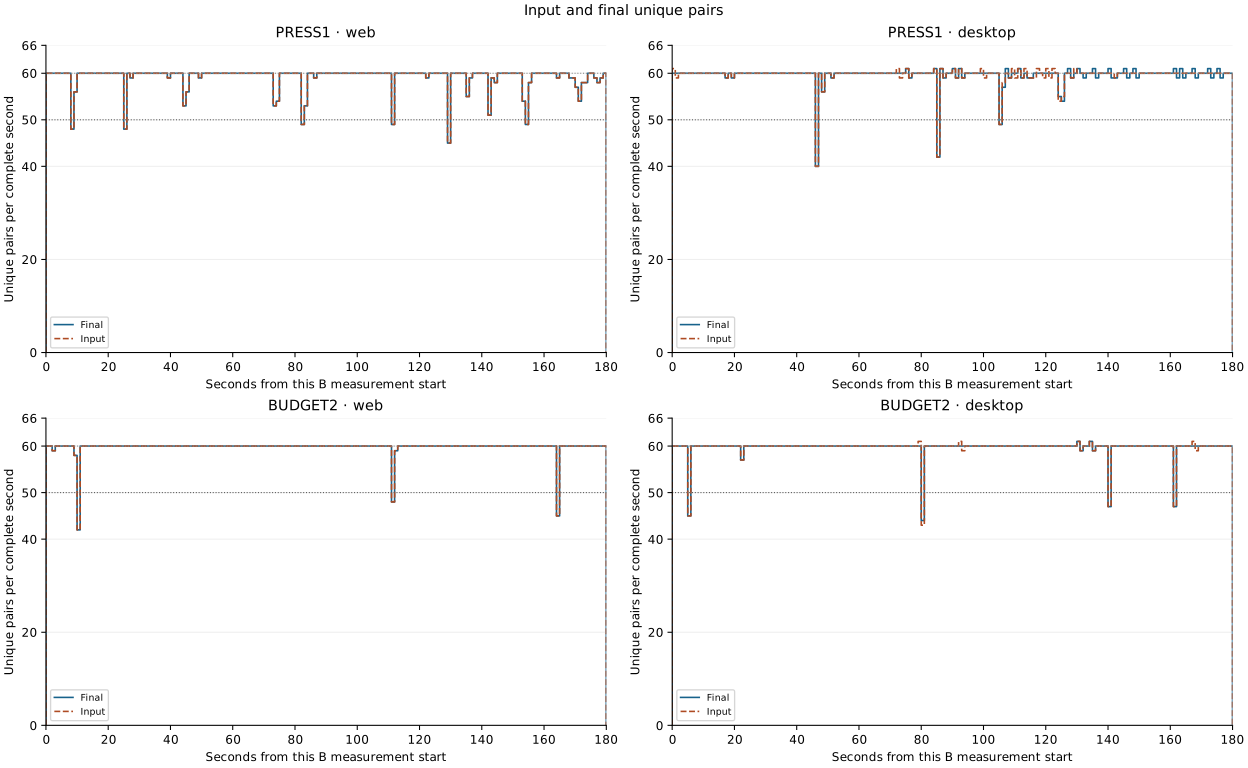 B clocks remain separate. Input: dashed orange. Final: solid blue. All 720 complete seconds use a 0–66 scale. Dotted lines mark 50 and 60. Partial tails remain in the table.
Source pressure
The source checks its byte limit at admission, before encoding and after encoding.
A check rejects additional bytes above the limit. It also rejects observed queued bytes above the limit minus those additional bytes.
The remaining allowance is zero bytes for PRESS1 and 8,294,464 bytes for BUDGET2.
The recorder stores positive checks and actual drops. It does not store timed buffer values for passed checks.
PRESS1 recorded 155 web drops and 71 desktop drops. BUDGET2 recorded 40 web drops and 54 desktop drops.
No measured run recorded a drop after encoding. The tables retain the other two phases separately.
A positive check and its actual drop are separate records for one decision. Drop counts include only actual drop records.
BUDGET2 positive observations exceed one packet of queued bytes. These points do not show buffer values at passing checks.
The inclusive byte thresholds describe observed positive checks. They do not predict delivery under another limit.
Each pressure diagram uses its own A clock. Each delivery diagram uses its own B clock.
A frame sequence can join identities across processes. It does not establish latency or simultaneous timing.
Open full-size diagram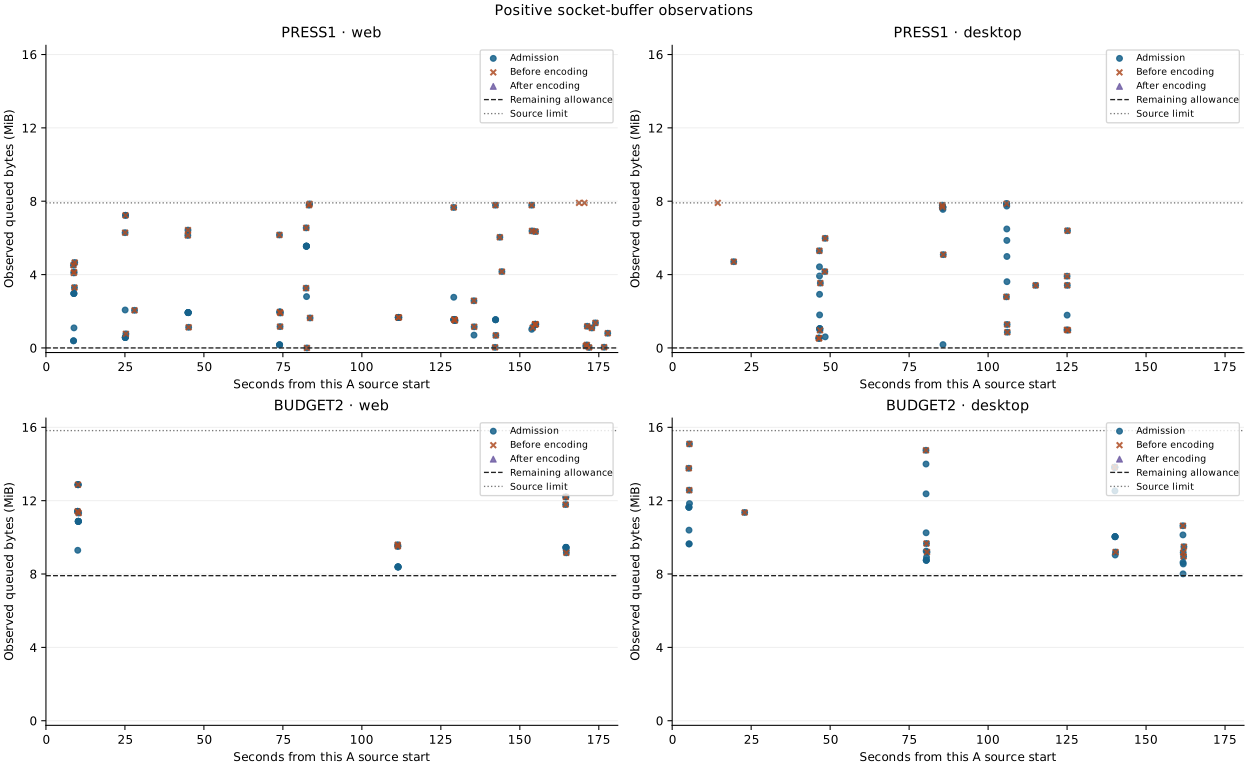 A clocks remain separate. Points show positive checks only. Shapes identify phases. Dashed lines mark each remaining allowance. Dotted lines mark each source limit. There is no continuous buffer trace.Open full-size diagram
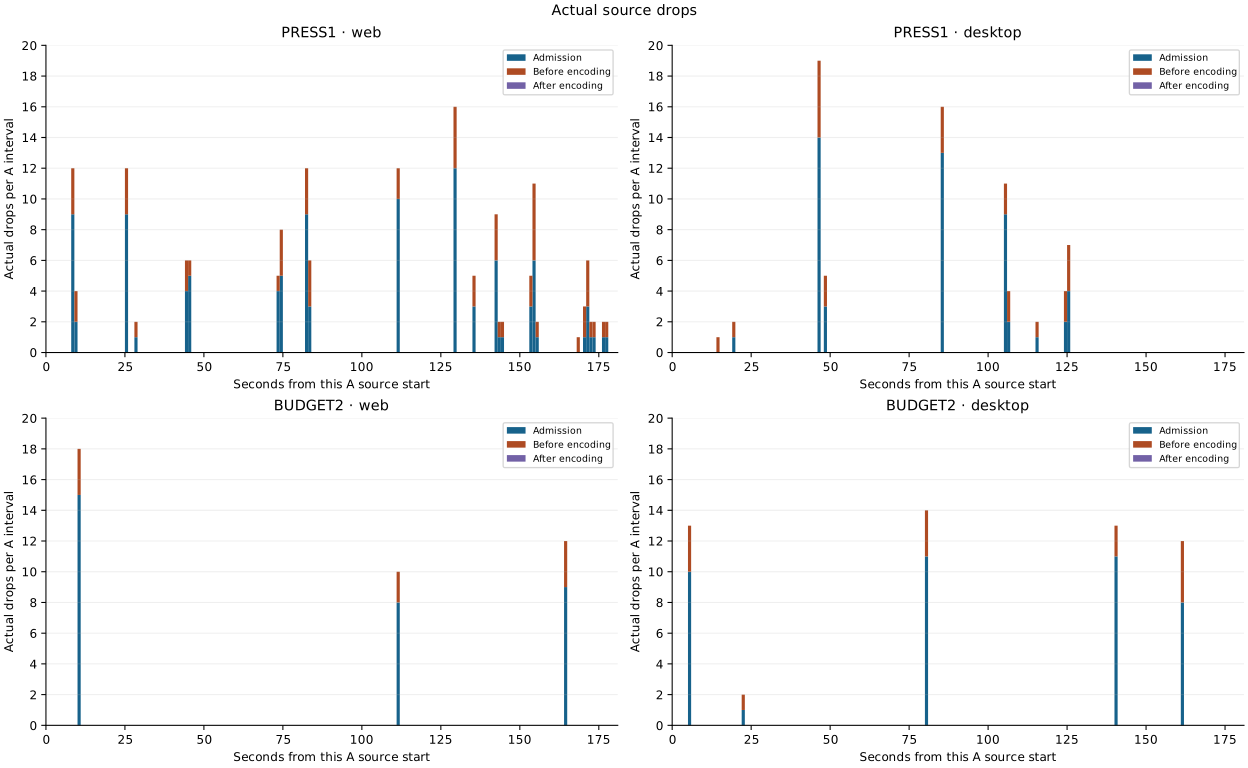 A clocks remain separate. Each bar includes actual drops in that second or partial tail. Colors separate phases. Positive-check records do not add another drop.
Startup and diagnostic work
The raw data retains startup, warmup and cleanup events. These events do not enter the measured drop counts.
The PRESS1 desktop startup prefix includes sink generations 1 and 2. Later measurement intervals use the bound generation.
All accepted pressure journals have zero unread gaps. Ring overwrite counts remain explicit.
Each long observation has 21 pressure cuts. Each cut has a 250 ms deadline for capture, pressure drains and pressure-journal writes.
Cut durations include controller waiting and I/O. They are not CPU costs or measured effects on rendering.
Existing source checks and source-journal writes occur outside that pressure-cut deadline.
The recorder retains 393,312 bytes of numeric storage. Positive checks and drops add clock reads.
Rejected attempt
BUDGET2 web-observe5-budget2v1-a1 was not accepted. It recorded two invalid input markers and two invalid final markers.
It has no accepted cell journal or rate. The report excludes it from throughput tables and plots.
Its source and pressure journals stopped without a complete measurement receipt. Its B telemetry journal also remained incomplete.
The native process exited and the browser owners reaped their processes. Media cleanup still recorded an error for page B.
Retained telemetry shows a wall-minus-page clock offset change of about 77 ms in A and 80 ms in B.
The clock change does not establish why the marker checks failed. The later accepted web five-second attempt remains a separate record.
Limitations
This sequential comparison does not establish causation, repeatability or a performance ranking. It does not estimate statistical uncertainty.
A larger source limit permits more queued data. These observations do not establish its effect on end-to-end latency.
There is no uninstrumented comparison with the same scheduling conditions. The recorder does not measure continuous socket occupancy.
There are no in-run thermal or frequency measurements. These tests do not establish garbage collection as the cause of pressure.
Native durations include setup and cleanup. Their monotonic clock is separate from both page clocks.
These measurements do not establish released-product performance, external camera delivery or hours-long operation.
The earlier PRESS1 and allocation reports remain unchanged.
Source references
The numeric data includes result, control, source-manifest, native-receipt and journal digests.
SHA256SUMS identifies every public file. The exact private inputs remain outside the report.
Numeric data · Text report · Checksums
Earlier PRESS1 report