Direct RGBA receive: native write CPU and elapsed time
Method
This diagnostic measures calling-thread CPU time around the existing native HTTP packet write call.
Noisedeck A sends 1920 × 1080 RGBA packets through Sync to Noisedeck B. Native camera publication remains active.
B uses the existing HTTP BYOB reader. The source limit remains two packets, or 16,588,928 bytes. Receiver credit remains one.
The browser, source encoder, renderer and queue policy retain their frozen BUDGET2 bytes. Only the native timing diagnostic changes.
The tests use GLSL and synth.testPattern. Timing uses pattern 0 with gridSize 4. Pixel controls use pattern 5 with gridSize 16.
Retained host metadata identifies an Apple M2, eight logical CPUs, 24 GiB of memory and Darwin 23.6.0.
Observed power samples show AC power. They do not prove continuous AC power between reads. The tests include no in-run thermal or frequency measurements.
Delivery observations
Four fresh pixel controls and four observations passed. The observations include two five-second and two three-minute runs.
The long observations retain all 360 complete B seconds and both partial tails. The short observations retain ten complete seconds and both tails.
Input and final markers must match within the same render. Rates use the full measurement span, including the tail.
Web averaged 54.863649 unique pairs/s, with 41 complete seconds below 50. Desktop averaged 58.467740, with four below 50.
These instrumented sequential runs do not establish sustained 60 frames/s, a causal ranking or released-product performance.
Open full-size diagram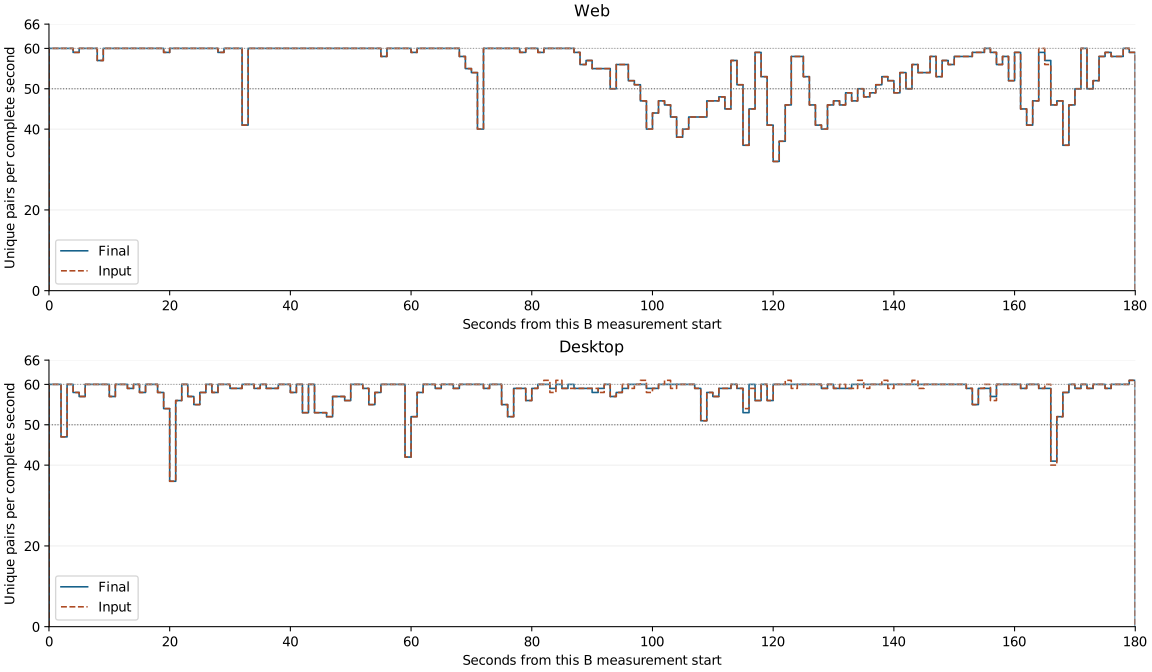 Separate B clocks. Solid blue: final. Dashed orange: input. All 360 complete seconds use 0–66. Dotted lines mark 50 and 60. The table retains partial tails.
Native CPU and elapsed time
Native records cover each entire native lifetime, including setup and cleanup. Their clocks have no measured alignment to either page clock.
The original elapsed timer surrounds uv_write. A calling-thread CPU read precedes that timer and another follows it.
The CPU difference includes calling-thread user and kernel execution. It is not the exact CPU time of the inner write interval.
The CPU clock advances only while the calling thread executes. The elapsed clock-read brackets can include scheduling delay.
Web recorded 10,176 calls and seven elapsed calls of at least 25 ms. Desktop recorded 10,827 calls and two such calls.
The longest web call took 227.731292 ms elapsed and 4.019 ms outer-window CPU. The longest desktop call took 42.512834 ms and 3.087167 ms.
The difference between elapsed and CPU time does not identify the cause. These records do not distinguish descheduling from a system wait.
CPU records have no clock errors, rejected records or overwritten events. All retained slow records and the separate worst record remain in the numeric data.
Open full-size diagram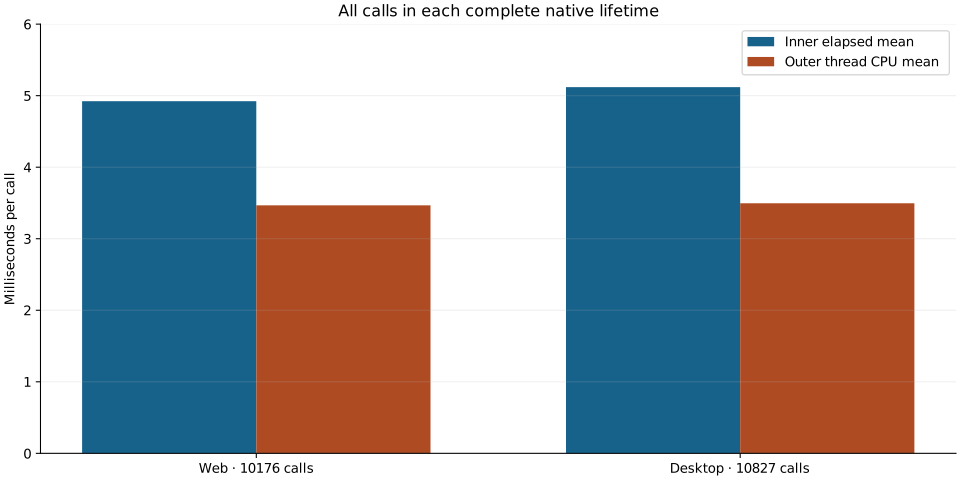 Each mean divides its complete native-lifetime total by its own call count. The CPU interval surrounds the elapsed interval. These totals include setup and cleanup. This is not a B measurement interval.Open full-size diagram
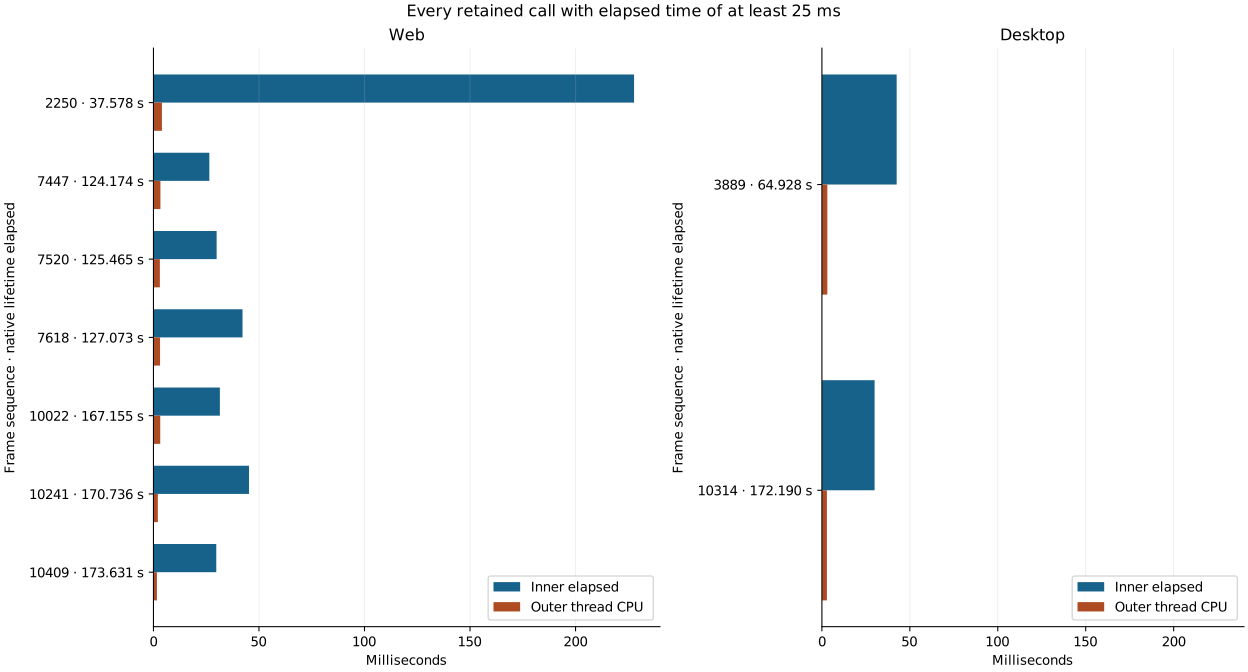 The diagram shows all seven web and two desktop slow calls. Both panels use the same 0–240 ms scale. Labels give frame sequence and time from each native origin. No page-clock alignment exists.
Clock-read brackets and native event loss
The fixed recorder uses 22,744 bytes and permits 20,000 calls. That recorder adds no per-call dynamic allocation.
The bracket measurements include the CPU clock reads and surrounding elapsed time. They exclude later recorder validation and storage.
The diagnostic subtracts no overhead. The brackets do not measure total instrumentation overhead.
The existing write-callback elapsed measurement now includes the added CPU reads and recorder work after submission.
The older six-stage ring overwrote 785 of 1,041 web events and 92 of 348 desktop events. Each retained 256 records.
Its aggregate counts, elapsed totals and maxima remain available. Individual lost records cannot be reconstructed.
The web maximum has no retained individual native callback record. Its separate CPU record remains available.
Source intervals
The source pressure recorder keeps positive checks and actual drops. It does not record continuous socket occupancy.
Measured A intervals recorded 541 web drops and 152 desktop drops, all at admission or before encoding.
These source intervals use their own page clocks. Their durations differ from the B measurement spans and native lifetimes.
Frame sequences can join identities across processes. They do not establish latency or simultaneous clock readings.
Rejected web attempt
The first web five-second attempt was not accepted. The source renderer was not running before cleanup.
The source pattern identity and sender/bridge checks remained available. The stop caller was not recorded.
The attempt retained 71 matched pairs with no invalid markers. It has no accepted rate or accepted cell journal.
All actual browser and native processes exited. Source, pressure and cell journals are incomplete. A and B telemetry journals are complete.
The native lifetime independently passed CPU and ownership checks. It recorded 358 writes and one slow write.
That write took 32.551750 ms elapsed and 3.653250 ms outer-window CPU. Its frame sequence was 52. The source measurement started at sequence 312.
The slow write belongs to a frame with a lower source sequence than the start-cut sequence. This does not align native and page clocks.
The unchanged five-second repeat passed and remains a separate result.
Scope and references
These records do not establish a garbage collection cause, thermal cause, external camera delivery or hours-long behavior.
No uninstrumented run with identical scheduling conditions is available. The earlier source-budget reports remain separate.
The data retains result, source-manifest, native-receipt and journal digests. The candidate has not shipped as a product update.
Numeric data · Text report · Checksums
Earlier source-budget report